Surface Prep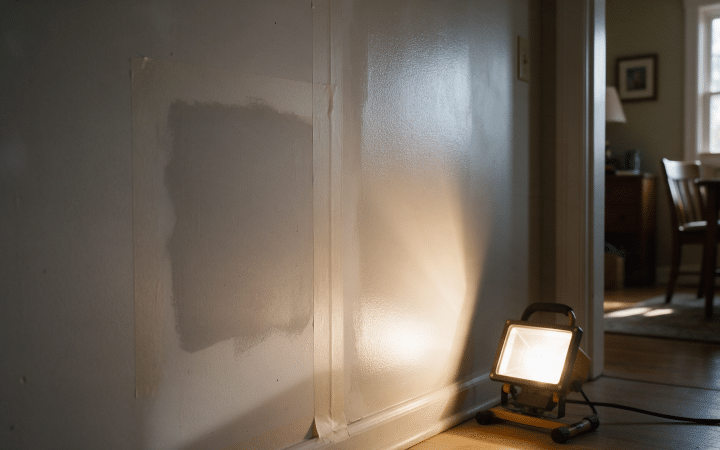
How should primer look on a wall: the flashing test before you paint
Primer that looks patchy or half see-through over a repair isn’t automatically a bad job. Here’s what even coverage actually looks like, why primer flashes over…
Interior walls & ceilings · US homes
Holes, hairline cracks, brown stains, bubbling paint, a ceiling that looks like cottage cheese. Pick the symptom, get the fix, with the real tools, the real dry times, and what it costs if you call someone instead.
Seven rooms of the house, seven problems
Holes from doorknobs to studs, corner bead, cracks that keep coming back, and nail pops.
Water stains that bleed through paint, popcorn removal, sagging panels, and hairline seams.
Black spots, condensation on cold walls, and the point where you stop and call someone.
Primer that actually blocks, skim coats, sanding grit, and which sheen hides a bad wall.
Cutting in without tape, roller nap by texture, dry time vs recoat time, trim order.
Getting old paper off without wrecking the drywall, seams that lift, peel-and-stick reality.
Line-item DIY material costs against real 2026 contractor quotes, by square foot and by job.
Standard GA-214 · the industry finish scale
Drywall has six official finish levels. Almost every DIY patch that fails in raking light stopped at Level 2 and got painted like it was Level 4. Each step below is one more coat, feathered wider than the last.
Board is hung, nothing else. Temporary construction, or a wall that’s coming back down.
Joints and interior angles taped, one coat. Attics, plenum spaces, anywhere nobody looks.
Garages, workshops, or backing behind tile. This is where most rushed home patches actually stop.
Fine under knockdown or orange peel. Never acceptable under a flat or eggshell paint.
The residential standard: flat paints, light texture, most wallpaper. If you’re patching a living-room wall, this is the finish you’re aiming for.
Required for gloss and semi-gloss, and for any wall hit by low-angle window light. Expensive, and worth it exactly once.
Fresh off the drop cloth
Primer that looks patchy or half see-through over a repair isn’t automatically a bad job. Here’s what even coverage actually looks like, why primer flashes over…
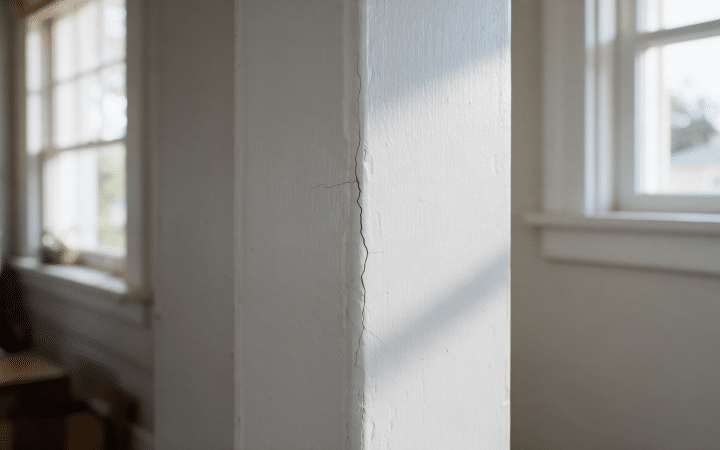
A crack at a wall corner is not one repair. Whether it starts at an inside tape line or a bent outside bead decides the method,…
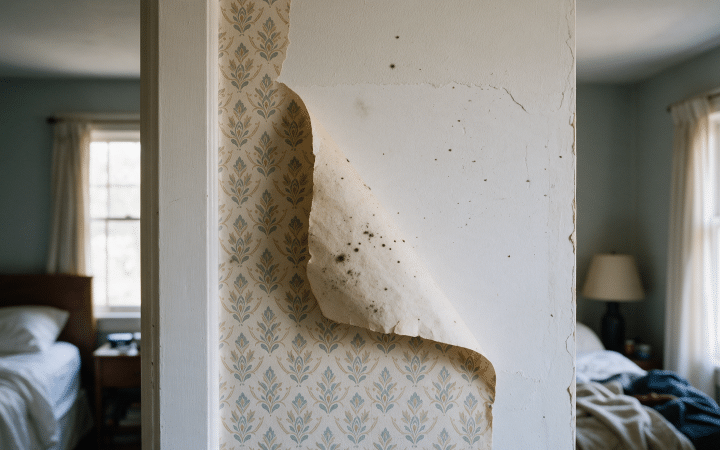
Mold behind wallpaper usually means water is reaching the wall and the paper is trapping it. Here is how to check without stripping, when the wall…
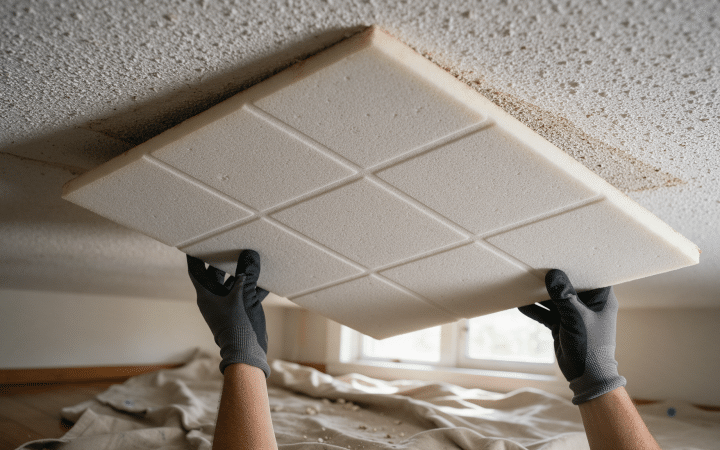
Skimming over popcorn ceiling texture rarely works the way it looks like it should. Here are the methods that actually cover it for good, and the…
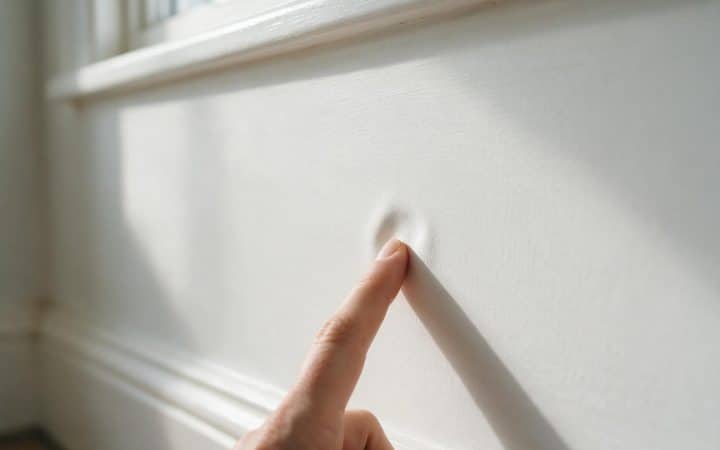
Dry to the touch and ready for a second coat aren’t the same thing, and neither is fully cured. Here’s what actually controls the clock, and…
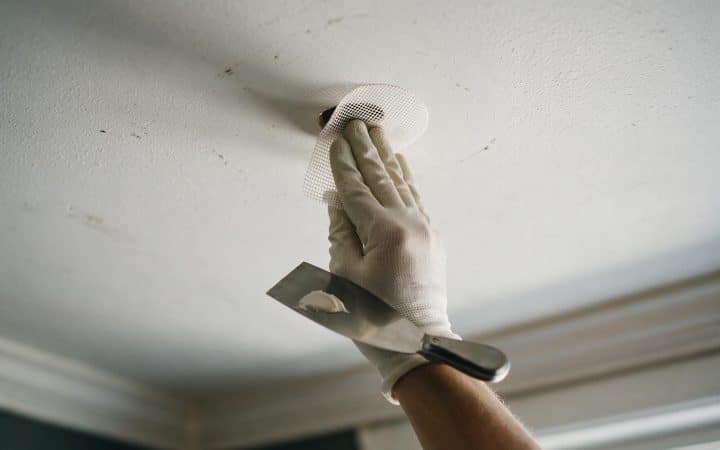
A nail hole patches the same overhead. Past that, gravity changes the method — why joint compound wants to sag on a ceiling, and how to…
2026 US averages · updated monthly
Doorknob hole
$12vs $180–$350 pro
Ceiling water stain
$28vs $250–$600 pro
Popcorn removal
$1.10per sq ft · vs $2.20–$4.50 pro
Full skim coat
$0.85per sq ft · vs $1.90–$3.40 pro
Prices are national averages collected from supplier listings and contractor quotes. Your zip code will move them. We update this table on the first of every month.

Every guide here gets built before it gets written. That means a real wall, a real failure mode, and a photo of the part that went wrong — because the step everyone skips is never the step the manufacturer warns you about.